Posted on 29 April 2009
eritrean-airlines2
The recession and the economical slowdown is hurting the African aviation sector at the most inconvenient time. Just when it seemed that the sector was experiencing tremendous growth rates due to increased economical activity with the outside world, the recession made an abrupt end to it. The growth motivated African avitaion to improve the quality, safety and service to provide the same standard as western carriers, due to increasing partnership with other non-African airline as well as the growing number of freight and passengers volumes.
In early April European and African representatives have met to discuss the establishment of a common strategic framework for air transport safety (European Commission).
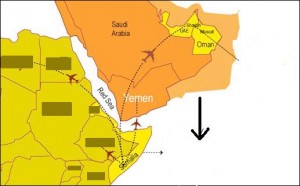
Early during the year in January African aviation traffic dropped by 2.6% according to the International Airline Transport Association (IATA). Many African airlines are reducing capacity by cutting on routes from this year. Eritrean Airlines stopped flying from Asmara to Frankfurt (
capitaleritrea), Air Namibia suspended flying to London, Air Senegal stopped operating at all and many other carriers took similar actions. The near future does not look promising as demand for travel and freight is continuing to drop. In addition IATA expressed concerns that the Swine Flu outbreak will further reduce demand when the timing could not be worse. The latest IATA statistics show that airline revenues declined by up to 20% for the month of March.
Posted on 28 April 2009
According to the WHO the swine flu epidemic has so far not broken out in Africa. There are no known cases of infected people on the continent. Given the poor medical infrastructure and a lacking response network on the continent, an outbreak in Africa could have devastating impact on the death toll and rate of infections linked to swine flu.
Posted on 28 April 2009

massawa-sunglasses
Luca’s grandfather was an Italian living for a while in Eritrea. When Luca was looking through the old belongings of his grandfather, he discovered a model of sunglasses from old times, which fascinated him. He had the idea to bring the elegance of Africa paired with the design of Italy into a newly merged model of sunglasses. He went back to the original manufacturers to reproduce them and named some designs after places in Eritrea, such as Asmara, Massawa and Keren. The collection of sunglasses and old pictures of his grandfather in Eritrea can be viewed on the brand’s homepage. The sunglasses are manufactured in Italy.
Posted on 27 April 2009

tadesse-abraham- eritrea
Abraham Tadesse the new comer from Eritrea made his first Marathon and finished the first place at the Zurich competition. The 27 year old Eritrean runs for the team LC Ulster. The second place went to Oleg Kulkow from Russia and Tesfaye Eticha from Ethiopia achieved the third rank.
Read more:
Posted on 27 April 2009
World Bank head Robert Zoellick warns of a “human catastrophe” unless more is done to tackle the global economic crisis.
Posted on 25 April 2009

eritrea-malaria
In a recent Wall Street Journal report, Mr. Chernin (Board of Directors Fight against Aids, Malaria and Tuberculosis) is explaining that the fight against Malaria has been a success story in countries such as Eritrea and other Horn of Africa nations. As Malaria is said to cost 1.3% of the GDP to those countries who do not progress in the fight against the disease, it shows that it can pay out for a nation to invest in getting Malaria under control. The Wall Street Journal report highlights that it would be possible to eliminate Malaria completely from the earth, if governments and nations act swiftly. Read more from the Wall Street Journal Report. In another news cast by
Reuters the Lutheran World Federation claims that Malaria was a major problem for Eritrea during the 90s causing most deaths for adults and children above the age of five. Techniques introduced by the authorities in Eritrea such as:
- Sufficient Health care for Patients
- Introduction of insecticide treated nets in Eritrean rural areas such as villages
- Intensive participation of the community in draining Mosquito breading sites
- Public relation and mass media to create awareness
have helped Eritrea to nearly eradicate the disease.