^
The social online platform Facebook has revolutionised and facilitated the means of communication and self-expression in today’s world. In the past, “Internet Phobia” was widely spread amongst the early generations of Internet users.
People were scared to use their credit card online or would be very cautious to display personnel information in the world wide web. “There were times you would go to the travel agency in order to book a flight!.”
This was because people would fear internet fraud or simply would give their personal privacy a high priority. Things have changed and with Facebook a new opportunity had been opened to thousands of young Eritreans around the world. Suddenly, they were able to find easily their alike in order to share and express their common identity.
Facebook for example has functionalities, were people can create and become members of groups with a common purpose. The largest group has 2.178.278 members and is called “Can we get all the facebook users in one group ???”, which seems to be quite an ambitious target considering that Facebook has in total 200 million members worldwide.
Read the rest of this entry
Eritrea, Facebook, Friends, people
^
mybaobab-greeks-in-eritrea
Eritrea is a country rich in culture, diversity and has multi ethnic heritages, which not many people know about. One of these heritages is the Greek Community of Eritrea.
In the 19th century after the Greek war of Independence many Greek merchants had set up homes and trade relations with countries bordering the Mediterranean Sea as well as with Alexandria in Egypt.
The merchants and their business ventures brought along many family members, Greek teaching schools and the Greek Orthodox church.
According to Costas, an Eritrean born in Asmara with Greek ancestors, the first Greeks arrived in Eritrea in the middle of the 19st century coming from Egypt and Sudan (www.mybaobab.com). Their first settlement was established in the Eritrean town of Keren by Vlassis Frangoulis and soon grew towards a community of 178 Greek settlers during the Italian census in 1894.
Asmara’s first Greek community was founded in 1900 and was at that time under the protectorate of the Greek Embassy in Addis Abeba. In their 100 years of history in Eritrea the Greeks reached their peak with around 400 people during the initial decades of the Italian intrusion of Eritrea.
In the course of the rule of the Italian fascists in Eritrea many Greeks were sent to a concentration camp in Quoran.
The strain caused to the Eritrean Greeks by the Italians ceased soon after the British took over the administration of Eritrea in 1941, because high ranking Greek Cypriot officers amongst the British Army came to their aid.
Latest estimates about the number of Greeks in Eritrea are from 2004 and show that around 30 Greeks live in the country today. Let us remember that the name Eritrea is derived from the Greek word Erythrea, which means red a colour known to symbolize blood, love and our heartbeat.
Happy National Day Eritrea
Eritrea, national day, people
^
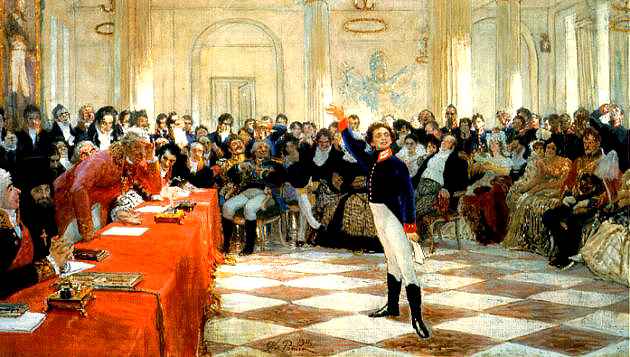 Alexander Sergeevich Pushkin was the creator of modern Russian Literatur and therefore, one of the greatest poet in European and Russian history. Pushkin is comparable to Wolfgang Amadeus Mozart or Johann Wolfgang von Goethe, in terms of the cultural heritage he left behind for mankind and the world. As a person Alexander is described as a man who expressed his love for humans, nature and simplicity through his scripts, poems and written tales.
His liberal views mixed with a new style of story telling sometimes caused him trouble with the authorities of his time, nevertheless he managed to revolutionized and form Russian Literature as we know it today.
He wrote one of his biggest master pieces, the novel Eugene Onegin, around 1825. Pushkin was born in Moscow and was regarded as a talent, who published his first poem at the age of fifteen, before his academic education in Saint Petersburg had even started.
Alexander’s great grand father was Abram Petrovich Gannibal, who was born in 1696 in Loggo Sarda a place close to  Dekemhare at the Mareb River in Eritrea. Abram was brought by Emperor Peter the Great as a child to Russia and was baptized having Peter as his godfather.
According to historians, the boy was not the only black child to be taken from his native home in Africa during this era. Monarchs in Europe used to regard it as trendy at the time to have black children around their royal yards.
Pushkin’s grand father enjoyed academic education in science, arts and warfare in Paris, under the umbrella of the royal Tsar family. As a high ranking monarch Abram later became a general, military engineer and governor of Reval, which is known today as Tallin the capital of Estonia.
Alexander Pushkin, Eritrea, Gannibal, people, Russia
^
Grandma Tsege is a loving mother, wife and sister living in the United States. Her story is reminding me of our parents and what they had to go through to get us where we are today. She has left her heart in Eritrea, as many of our parents did. Never shall we forget what losses they had to endeavour and what they had to sacrifice with dignity and pride.
Read more: Brenda’s Blog.
Eritrea, people, woman
^
Andnet Zere, an Eritrean nurse from Toronto in Canada is going to take part in the “a la Cart” program of international dishes in Toronto. She will be serving Eritrean injera with different traditional ingredients and souces for the visitors of the venture. People like Andnet and you and me became good global ambassadors in their own right to reveal what Eritrea is really about. With dignity and a broken heart, it is the small Eritrean in the streets of the World, who has to deal with the increasing wrong perception of Eritrea.
culture, Eritrea, injera, people


