^

Sanctions on Eritrea

The AU is calling on the Security Council of the United Nations to implement sanctions against Eritrea.

These sanctions can imply the suspension of trade relations, rail, sea, air, postal, telegraphic, radio as well as the severance of diplomatic relations with a state.

For countries such as Eritrea being able to import goods and services for the national economy can mean the life line for survival.

The threat of sanctions on goods and services in hand with the introduction of tariff and trade barriers, import duties as well as import and export quotas would cause heavy administrative fences for Eritrea. This would make it nearly impossible for a country to supply for the needs of its people.

Eritrea is already one of the poorest nations in the world, with an average yearly per capita income of $US 200 and ranking 157th out of 177 states in the World Development Index (World Bank 2006). Thus, it seems obvious that the introduction of sanctions could have a crushing impact on trade and food security levels for the population of Eritrea.

Especially, as the country is already highly vulnerable to external factors such as commodity prices and foreign exchange flows.

Previous examples of countries which have been sanctioned resulted in impoverishment, increase of child mortality and the lack of elementary items for living. This has led to a majority of people not being able to feed themselves, the GDP falling extremely and the gradual run down of necessary facilities.

In the eye of the increasing economical advances made in the country, the call to sanction Eritrea by neighbouring countries is definitely representing an ethical and humanitarian injustice against the people living in Eritrea.

The WHO has stated recently that good progress has been made in Eritrea to improve life expectancy for its people.

For the first time in years, foreign investment seems to not be scared away from the nation in the Horn of Africa and willing to provide with heavily needed foreign exchange.

Further, the World Bank is underlining that the prospect to ensure food security, develop human resources and physical infrastructure has improved for Eritrea. Moreover, the World Bank is referring to the positive outlook for economical growth with the introduction of a free trade zones as well as the development of the mining sector in Eritrea.

Between 2005 and 2007 Eritrea had an average GDP growth rate of 1%. Experts have estimated that Eritrea requires a sustained real economic growth of 7% or higher in the long term, to reach its Millennium Goal to reduce the number of people living in extreme poverty by 50% until 2015.

, ,
^

asmara catholic church                               Being in the middle of an economical downturn is definitely not going to be a very easy situation for many people around the world. Nevertheless, it is a periodic occurrence, which is necessary to put things right in a world living too often beyond its means.

Eritrea has been on the track of self-reliance since the independence gained from Ethiopia in the beginning of the Nineties. In many fields, such as humanitarian aid, foreign investment exposure and transport infrastructre, it chose directions apart from the norm of other African countries.

Of course this is the harder way to go for a nation and often difficult to comprehend, because it requires sacrificing in first instance. Moreover, for many years Eritreans have lived far below their means for the sake of their nation and national identity. While others, which now have to come into terms with the bubble burst, used to know no limit.

Thus in times of recession individuals, corporates, national economies and the world tend to lay out their cards newly because it resembles a period of chance, thoughtfulness and self scrutiny.

This is also a chancel for Eritrea to enter into a new relationship in respect to international trade. Especially as a nation, which has a big tourism potential, is soon to enter into the mining industry and is opening its sea ports for free trade.

On the preparations for the upcoming Eritrean National Day on the 24th May 2009, the President of Eritrea has explained to Reuters News Agency, how the country is going to approach these challenges.

“The Norwegians would like to talk about 150 years from now. The Nigerians may want to exploit all their oil resources in 10 days or 10 hours or maybe 10 years, and that’s it, you’re finished. This is a resource of generations.” (President Isaias Afwerki of Eritrea on Reuters News Agency)

The President believes that economical stimulation has to be sustainable in order to fit a nations characteristic of infrastructure. Therefore, he suggests that instead of a tempting short term approach, Eritrea should seek for a more adequate pace to manage the exposure to a free market and a influx of foreign investment. This would be the only way how to best serve Eritrea’s interests for todays and the coming generations ahead.

, , , , , ,
^

massawa port
Massawa

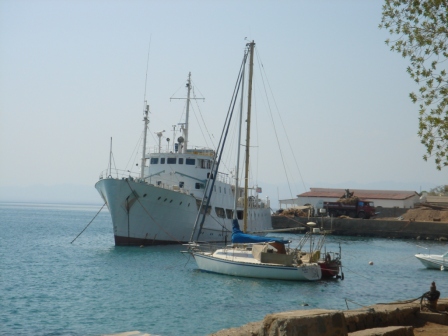
Port of Massawa in Eritrea

The CEO of Eritrea’s Free Zones Authority Araia Tseggai confirmed in a interview with Reuters, that Eritrea is planning to launch a free trade zone for Massawa harbour later this year. Free trade zone means that Eritrea would abolish trade barriers such as taxes, certain charges and quotas as well as minimize bureaucracy on it’s ports, in order to attract foreign investment.

According to Araia dozens of companies have already registered, because Eritrea’s ports are located along the busiest shipping routes of the world. Further, he outlined that approximately 20.000 ships loaded with 700 million tonnes of cargo, which is around 9% of the total global freight market, would pass each year the coast of Eritrea.

The country is said to have invested millions of $US for the infrastructure of the harbour and airport in Massawa. There are already around 12 companies from countries such as China, Italy, Israel, India, Djibouti, Sudan and Dubai, which have registered under the scheme.

Araia points out that the competitive advantage of Massawa or Assab lies in the low labour costs compared to ports such as Dubai, Djibouti or Aden. Although, Eritrea is aware of the fierce competition from neighbouring countries, it believes it can tap into the niche market of small scale freight operations. Because, small companies would shift away from expensive harbours in the region in favour of the less expensive Eritrean ports. Thus, the initial strategy would be to focus on small cargo business first.

Eritrea’s second and strategically better located port Assab, due to it’s closer location to the Indian Ocean, will follow Massawa into the free trade zone in 2010. Eritrea hopes with this measures to stimulate economical activities in the country as well as to lay the foundation for a good soil of future trade with the world.

, , , , , ,
^

According to the Qatar News Agency, Sheikh Abdullah bin Zayed Al Nahyan met on Sunday with the President of Eritrea in Asmara, in order to discuss bilateral relations on investment, economy and trade. The UAE Foreign Minister is currently visiting several African countries in order to strengthen ties with the continent. Read more: QNA

, , , , ,