^

Sanctions on Eritrea

The AU is calling on the Security Council of the United Nations to implement sanctions against Eritrea.

These sanctions can imply the suspension of trade relations, rail, sea, air, postal, telegraphic, radio as well as the severance of diplomatic relations with a state.

For countries such as Eritrea being able to import goods and services for the national economy can mean the life line for survival.

The threat of sanctions on goods and services in hand with the introduction of tariff and trade barriers, import duties as well as import and export quotas would cause heavy administrative fences for Eritrea. This would make it nearly impossible for a country to supply for the needs of its people.

Eritrea is already one of the poorest nations in the world, with an average yearly per capita income of $US 200 and ranking 157th out of 177 states in the World Development Index (World Bank 2006). Thus, it seems obvious that the introduction of sanctions could have a crushing impact on trade and food security levels for the population of Eritrea.

Especially, as the country is already highly vulnerable to external factors such as commodity prices and foreign exchange flows.

Previous examples of countries which have been sanctioned resulted in impoverishment, increase of child mortality and the lack of elementary items for living. This has led to a majority of people not being able to feed themselves, the GDP falling extremely and the gradual run down of necessary facilities.

In the eye of the increasing economical advances made in the country, the call to sanction Eritrea by neighbouring countries is definitely representing an ethical and humanitarian injustice against the people living in Eritrea.

The WHO has stated recently that good progress has been made in Eritrea to improve life expectancy for its people.

For the first time in years, foreign investment seems to not be scared away from the nation in the Horn of Africa and willing to provide with heavily needed foreign exchange.

Further, the World Bank is underlining that the prospect to ensure food security, develop human resources and physical infrastructure has improved for Eritrea. Moreover, the World Bank is referring to the positive outlook for economical growth with the introduction of a free trade zones as well as the development of the mining sector in Eritrea.

Between 2005 and 2007 Eritrea had an average GDP growth rate of 1%. Experts have estimated that Eritrea requires a sustained real economic growth of 7% or higher in the long term, to reach its Millennium Goal to reduce the number of people living in extreme poverty by 50% until 2015.

, ,
^

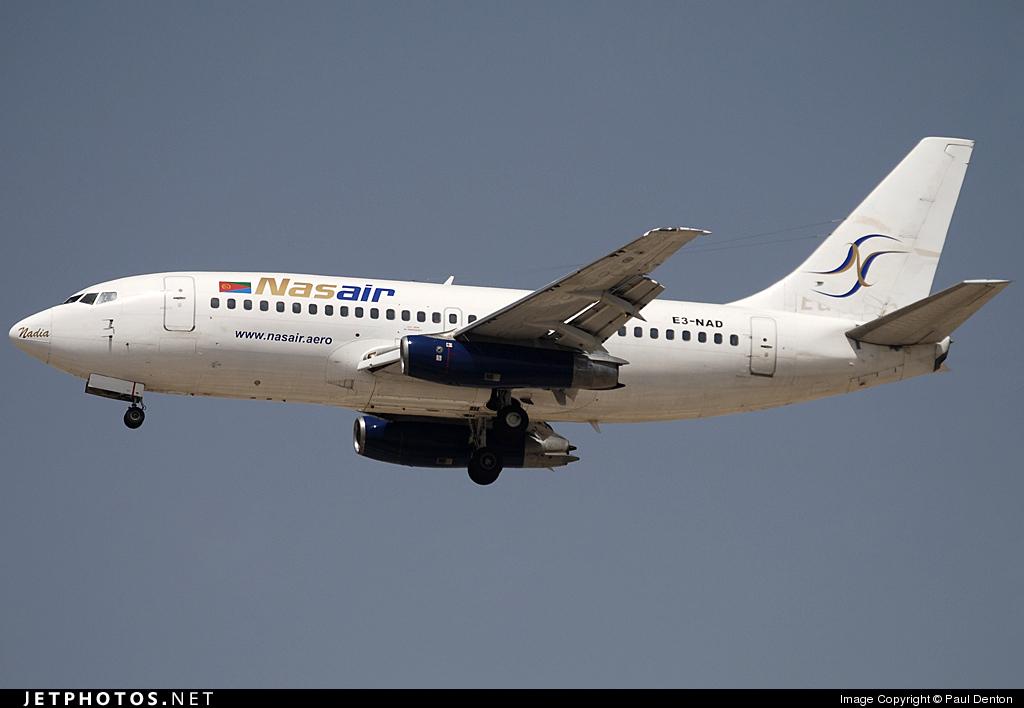
Sudan Airways made its first flight from Kassala in Sudan to the Eritrean capital Asmara. According to the Sudan Tribune, the airline chose the occasion of the 18th anniversary of the independence of Eritrea to launch the first flight.

Sudan Airways was formed in 1947 and began as a subsidiary operation of the Sudan Railways System. In 1954 the airline added its first international flights.

However, the airline had in the recent past some safety issues regarding accidents involving passenger fatalities. On 23 June 2008, the Sudanese CAA announced grounding of Sudan Airways citing the carrier’s failure to take corrective meassures following an audit of the airline.

In 2007 the company carried 500.000 passengers with a seat occupation of 50% and employed 1353 staff. Sudan Airways has a mixed fleet of 12 Aircraft consisting out of 4 Airbus, 1 Russian build Antonov, 2 Boeing and 7 smaller planes for regional operations (ATI).

The Airline has its major hub in Khartoum and is owned to 49% by the AREF Investment Group, 21 % by Faiha Holding Company and 30% by the Sudanese Government.

Last October, the managing director of Sudan Airways Ahmed Omer Abdelrahman announced big expansion planes and a fleet modernisation during the Arab Air Carriers Organisation conference in Tunis. The expansion plan was including the introduction of long-haul flights to China and India by 2010.

, , , , ,
^

Eritrea is a country rich in culture, diversity and has multi ethnic heritages, which not many people know about. One of these heritages is the Greek Community of Eritrea.

In the 19th century after the Greek war of Independence many Greek merchants had set up homes and trade relations with countries bordering the Mediterranean Sea as well as with Alexandria in Egypt.

The merchants and their business ventures brought along many family members, Greek teaching schools and the Greek Orthodox church.

According to Costas, an Eritrean born in Asmara with Greek ancestors, the first Greeks arrived in Eritrea in the middle of the 19st century coming from Egypt and Sudan (www.mybaobab.com). Their first settlement was established in the Eritrean town of Keren by Vlassis Frangoulis and soon grew towards a community of 178 Greek settlers during the Italian census in 1894.

Asmara’s first Greek community was founded in 1900 and was at that time under the protectorate of the Greek Embassy in Addis Abeba. In their 100 years of history in Eritrea the Greeks reached their peak with around 400 people during the initial decades of the Italian intrusion of Eritrea.

In the course of the rule of the Italian fascists in Eritrea many Greeks were sent to a concentration camp in Quoran.

The strain caused to the Eritrean Greeks by the Italians ceased soon after the British took over the administration of Eritrea in 1941, because high ranking Greek Cypriot officers amongst the British Army came to their aid.

Latest estimates about the number of Greeks in Eritrea are from 2004 and show that around 30 Greeks live in the country today. Let us remember that the name Eritrea is derived from the Greek word Erythrea, which means red a colour known to symbolize blood, love and our heartbeat.

Happy National Day Eritrea

, ,
^

 asmara market                             The World Health Organisation in Geneva (Switzerland) has published its annual WHO Health Report for 2009 on the 21.05.2009.

Life expectancy for Eritrean females has increased from 53 years in 1990 to 65 years in 2007. Amongst Eritrean males the expected life span increased from 28 years to 61 years.

The unusual jump of 33 years for males between 1990 and 2007 can be mostly contributed to the end of the war and independence struggle.

Nevertheless, the average life time for both males and females in Eritrea is 63 years. In comparison the African average lies by 52 years and is therefore 11 years lower. The average European makes it to 74 years, while the Eastern Mediterranean region with 64 years of life expectancy is comparable to Eritrea.

Moreover, the 2009 report shows, that there is a correlation between national income and life expectancy. The more disposal income people have the longer they tend to live.

In respect to child mortality in Eritrea, out of every 1000 children born 930 will make it over the age of 5. This is a good improvement compared with Japan where 996 children and Turkey where 977 out of 1000 will make it over their 5 birthday

It has to be mentioned, that between 2000 and 2007 Japan had on average 21 Physicians per 10000 inhabitants and Turkey 16, while Eritrea had only 1 Physician per 10000 of population. Regarding, Nursing and Midwifery staff Japan had 95 personnel and Turkey 29 per 10000 inhabitants in comparison to Eritrea with 6 personnel.

According to the WHO child mortality has decreased substantially in developing countries, Ties Boerma, the director of WHO’s Department of Health Statistics states;

“The decline in the death toll of children under five illustrates what can be achieved by strengthening health systems and scaling up interventions, such as insecticide-treated mosquito nets for malaria and oral rehydration therapy for diarrhoea, increased access to vaccines and improved water and sanitation in developing countries,”

According to the WHO Report 2009 the third smallest country in Europe, which is San Marion has the longest life expectancy for males with 81 years and the lowest child mortality in the world. The latest available data used by the WHO for gathering these information is from the year 2007.

^

asmara catholic church                               Being in the middle of an economical downturn is definitely not going to be a very easy situation for many people around the world. Nevertheless, it is a periodic occurrence, which is necessary to put things right in a world living too often beyond its means.

Eritrea has been on the track of self-reliance since the independence gained from Ethiopia in the beginning of the Nineties. In many fields, such as humanitarian aid, foreign investment exposure and transport infrastructre, it chose directions apart from the norm of other African countries.

Of course this is the harder way to go for a nation and often difficult to comprehend, because it requires sacrificing in first instance. Moreover, for many years Eritreans have lived far below their means for the sake of their nation and national identity. While others, which now have to come into terms with the bubble burst, used to know no limit.

Thus in times of recession individuals, corporates, national economies and the world tend to lay out their cards newly because it resembles a period of chance, thoughtfulness and self scrutiny.

This is also a chancel for Eritrea to enter into a new relationship in respect to international trade. Especially as a nation, which has a big tourism potential, is soon to enter into the mining industry and is opening its sea ports for free trade.

On the preparations for the upcoming Eritrean National Day on the 24th May 2009, the President of Eritrea has explained to Reuters News Agency, how the country is going to approach these challenges.

“The Norwegians would like to talk about 150 years from now. The Nigerians may want to exploit all their oil resources in 10 days or 10 hours or maybe 10 years, and that’s it, you’re finished. This is a resource of generations.” (President Isaias Afwerki of Eritrea on Reuters News Agency)

The President believes that economical stimulation has to be sustainable in order to fit a nations characteristic of infrastructure. Therefore, he suggests that instead of a tempting short term approach, Eritrea should seek for a more adequate pace to manage the exposure to a free market and a influx of foreign investment. This would be the only way how to best serve Eritrea’s interests for todays and the coming generations ahead.

, , , , , ,