Tag Archive | "Nile Basin"

The 3rd Nile Basin Development Forum closes in Kigali

Tags: , , , ,

The 3rd Nile Basin Development Forum closes in Kigali


KIGALI, Rwanda – The President of the Senate of the Republic of Rwanda, H.E. Jean Damascene Ntawukuriryayo has emphasized the need to overcome fragmentation that exists at various levels of climate change management.

He explained that in Africa there are many initiatives that are engaged in climate change matters, including the East African Community through the Lake Victoria Basin Commission, Inter Governmental Authority on Development, and the United Nations Environmental Programme. “There is need for synergistic interventions that optimize and ensure beneficial use of the available resources,” H.E. Jean Damascene Ntawukuriryayo added.

Speaking as Guest of Honor during the 3rd Nile Basin Development Forum in Kigali, Rwanda on 26th October, 2011 organized under the theme ‘Climate Change and its implications for Sustainable Development and Cooperation in the Nile Basin – Threats and Opportunities to Nile Basin Cooperation’ he said, “It is essential that policies, strategies, institutional and legal frameworks be developed, coordinated and harmonized at the global and regional level”.

Hon. Charity Kaluki Ngilu, Kenya’s Minister for Water and Irrigation and Chairperson of the Nile Council of Ministers in charge of Water Affairs, told participants that “the Nile Basin region is faced with a declining level of Lake Victoria. For us to guarantee water security for our citizens, I would encourage the Nile Basin Member States that are yet to sign the River Nile Cooperative Framework Agreement to do so.” She added that “Water security for Sudan and Egypt is not a matter for debate, but a right. To secure this right it is important the River Nile Cooperative Framework Agreement is ratified by all the Nile Basin States.”

Earlier, Dr. Wael Khairy, Executive Director of the Nile Basin Initiative, noted that achieving sustainable socio-economic development and management of the Nile Basin presents a great challenge, which calls for joint regional action as well as explicit political-will and financial commitment from all Nile Riparian States and development partners. He said the “Nile Basin can be resilient to climate change if, and only if, our Riparian States work together as one body”

The 3rd Nile Basin Development Forum was closed today 28th October, 2011 by the Host, Hon. Ambassador Stanislus Kamanzi, Minister of Natural Resources of the Republic of Rwanda.

He noted that participants have ably deliberated on the challenges, existing opportunities and the ever growing threats of climate change to development agendas, not only in NBI but in the whole of Africa.

“We received captivating key note speeches, deliberated on core issues and what can be done in Governance, Finance, Food and Energy Security in enabling us adapt to climate change”, he added.

Participants from the Nile Basin countries namely, Burundi, DR Congo Egypt, Eritrea, Ethiopia, Kenya, Rwanda, South Sudan, The Sudan, Tanzania, and Uganda issued a ‘Kigali Declaration’ in which they called for cooperation among their respective countries in preserving and managing the Nile Basin environment by giving due attention to its water and land resources, wetlands and biodiversity and by addressing the impacts of climate change.

They also highlighted the need to support the empowerment of the Nile Basin Initiative to take more rigorous and effective steps towards implementing pertinent climate change adaptation measures, thereby contributing to the efficient water management and optimal use of the resources as well as poverty eradication leading to promotion of economic integration in the Nile Basin.

Participants further called for strengthening participatory and integrated approaches in planning and decision making, including the meaningful participation of the civil society and non-governmental organizations in our efforts on responding to climate change at national and regional levels.

During the Forum, NBI launched some of its key products relevant to the subject of climate change. These include the second release of the Nile-Decision Support System (Nile-DSS), which is a world class analytical tool for NBI Member States and NBI as an institution that supports rational decisions and promotes sustainable outcomes. It provides a trans-boundary framework for sharing knowledge, understanding river system behavior, as well as designing and evaluating alternative development scenarios, investment projects, and management strategies.

The first ever River Nile State of Basin report, which is currently under preparation, will be introduced. Among other things, this report provides access to accurate, credible and timely information to help in raising awareness and increasing understanding and appreciation about the natural environment, the people, communities and economic development of the basin.

The Nile Basin Sustainability Framework, a suite of policies, strategies and guidelines through which the NBI will ensure that its activities are sustainable. It will also be used ensure that the development and management of the Nile Basin water resources undertaken by NBI Member States with facilitation of the NBI are in accordance with the principles of integrated water resources.

The Nile Information System (Nile-IS), a web-based knowledge management tool that allows for easy storage, searching, organizing, retrieval, analyzing as well as disseminating and exchanging information collected from NBI programs and projects.

A number of FAO-Nile Information Products prepared between 1996 and 2008. These products are ‘policy neutral’ instruments for examining a linked future between the land and water in the Nile Basin– and exploring the issues related to the people that depend on the continued access to land and cycle of nutrients and water. They are tools for understanding the impacts of rising demand for food and water against a variable hydrological regime.

More than 200 participants from within and outside the Nile Basin countries, including Ministers in charge of Water Affairs and Members of Parliament in the Nile Basin countries, environmentalists, water managers, researchers, River Basin Organizations, International and Regional organizations, civil society, private sector, media, diplomatic missions and development partners attended the 3rd NBDF organized by the Nile Basin Initiative in collaboration with the Ministry of Natural Resources of Rwanda.

The 4th Nile Basin Development Forum will take place in Nairobi Kenya in 2013

Posted in Press ReleaseComments (1)

Nile Basin Discourse to Open South Sudan Office

Tags: , ,

Nile Basin Discourse to Open South Sudan Office


Based on the recent news, South Sudan is set to secede with a 99.57 percent vote. For NBD, this means that we have to prepare ourselves to amend our constitution and start the preparatory work of opening an office in Southern Sudan. Our Board has expressed their support and commitment to the establishment of another office in Southern Sudan.

To foster Nile Cooperation it is imperative that Southern Sudan is brought on board as soon as possible, as one of the Nile Basin riparian countries. There is much gained by involving all the riparian countries in the Nile Cooperation Programmes and Processes. A link that has its roots in the community at the national level is critical to the success of all NBD Programmes and Interventions.

NBD is a powerful civil society force and voice that positively influences Nile Cooperation programmes and processes. More support from development partners to enable us to effectively discharge our mandate, in relation to Southern Sudan, will be highly appreciated.

Opening up an office in Southern Sudan enables NBD to improve service delivery. Best value requires NBD to provide services that are cost effective, of a good quality and meet the demands of the local community.

NBD embraces the current opportunity and will utilize it to raise public consciousness and encourage debate on Nile Cooperation issues, enhance education and lifelong learning for all members of the community and explore potential socio-political, economic, environmental and cultural benefits of cooperation.

ABOUT NBD

NBD Vision

Nile Basin Discourse’s (NBD) vision is of a Nile Basin where there is sustainable social and economic development for all peoples of the Nile Basin, free of conflict, leading to achievement of justice, human rights, good governance, poverty eradication and protection of the environment.

NBD Mission

NBD transforms lives by ensuring that a fully informed and basin-wide civil society develops and plays a key role in achieving the vision, through pro-active and critical influencing of projects, programmes and policies of the Nile Basin Initiative and other development processes.

What NBD Does

NBD enables the civil society organizations working on Nile Basin Cooperation and Development issues to add value to the inter-governmental programmes and processes. NBD is a network of civil society organizations with its secretariat base in Entebbe, Uganda. NBD works with national partners, its membership understand national issues, and provide NBD with the skills and support to help it set up and manage practical and sustainable projects that meet the real needs of the communities. The national members are the National Discourse Forums in the ten riparian states (Burundi, DRC, Egypt, Eritrea, Ethiopia, Kenya, Rwanda, Sudan, Tanzania and Uganda). NBD also works regionally and internationally to change policy and practice and ensure that issues of Nile Cooperation and Development are brought to fore and play a vital role in reducing poverty in the Nile Basin.

Together with a growing number of development NGOs, NBD is committed to carrying out advocacy work in order to maximize the impact of its programme activities and to meet regional Nile Cooperation and Development needs. NBD therefore aims to influence the policies and practice of the main decision-makers, donors and public, to gain their commitment to Cooperation and Development of the Nile Basin.

For further information Please contact:
Davis J. Weddi Communication Of?cer
dweddi@nilebasindiscourse.org
www.nilebasindiscourse.org

Posted in Press ReleaseComments (0)

Nile Basin: Egyptian Minister Says Accusations Against Eritrea Not True

Tags: , , , , ,

Nile Basin: Egyptian Minister Says Accusations Against Eritrea Not True


Nile

Nile

Egypt State Information Service (SIS) is reporting that Egypt is denying reports that Eritrea diverted one of the Nile tributaries away from Egypt and Sudan.

Dr. Mohamed Nasr Eddin Allam, Egyptian Minister of Water Resources and Irrigation said reports are not true on Eritrea’s diversion of one of the tributaries of River Atbara which is nourishing the River Nile away from Egypt and Sudan.

He added that Eritrea’s technical capabilities are limited in this field and its contribution to the water resources of the Nile Basin is rather weak.

Allam said Egypt has approved last week the establishment of a number of dams in Ethiopia and some Nile Basin countries to cultivate 20,000 feddans by those countries. He affirmed that Egypt does not object the establishment of small dams by those countries, contrary to some parties’ allegations that Egypt is against development process in Nile Basin countries.

Egypt had approved the establishment of Tikrizi dam in Ethiopia since the year 2005 as the Ethiopian government presented the detailed feasibility studies on the dam to Egypt and Egypt approved as it is to be built for only power generation and would not affect Egypt’s quota of Nile water, he added.

The projects of building dams for power generation would also benefit not only Ethiopia but also the down stream countries, Egypt and Sudan.

On the other hand, Allam said the satellite survey of the Nile Basin by the Ministry for the Nile Basin countries indicated that the establishment on the Nile establishments including the small dams would not affect Egypt’s water Quota.

The two largest such establishments is Marwa dam of Sudan which stores 12 billion cubic meters a year and that is within the limit of Sudan’s water quota according to 1959 agreement between Egypt and Sudan.

The second establishment is that of Tikrizi dam in Ethiopia which stores nine billion cubic meters of water a year and it is used for power generation. Allam added that he made a report to the political leadership in this respect.

Relations between Egypt and Ethiopia at the best and there are cooperation by the two countries in the water question through the Nile Basin countries, the Minister added.

Egypt, Sudan and Ethiopia the eastern Nile Basin countries are conducting studies to carry out a number of power generation projects and power linkage, for the good of the three countries, the Minister added.

Posted in RegionComments (1)


  • Latest
  • Popular
  • Comments
  • Tags
  • Subscribe

Stock Quotes

CHN.AX0.265  chart +0.00%
NSU.TO6.20  chart +0.00%
SGC.V0.445  chart +0.00%
STB.AX1.360  chart +0.37%
NGQ.TO2.89  chart +0.00%
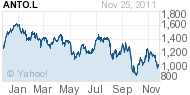
ANTO.L1292.00  chart +4.70%
DRA.AX1.170  chart +0.00%
GIP.AX0.016  chart +0.00%
GLD156.50  chart +0.00%
CAT97.10  chart +0.00%
TM68.42  chart +0.00%

Gallery

St-Michael.jpg island Dahlak.jpg Sanctions on Eritrea                             london-africa-ltd zersenay-tadesse-kenenisa-bekele Eritrea Sky.jpg diving equipment massawa