Archive | July, 2009

AFRAA Secretary General to Step Down

AFRAA

AFRAA

Long-standing African Airlines Association (AFRAA) secretary general Christian Folly-Kossi is to step down when his current term comes to an end in November.

Folly-Kossi has run AFRAA since 2000 but, after serving two consecutive five-year terms, he is planning to hand over to a new secretary general at AFRAA’s annual general meeting in November.

AFRAA says the association is seeking a successor. The position is based in Nairobi, Kenya, and the deadline for applications is 15 August.

Before joining AFRAA, Folly-Kossi spent 21 years with pan-African carrier Air Afrique, holding various commercial and financial management positions before becoming special advisor to the executive chairman. He has also been advisor to various African governments, including those of Togo and Cote d’Ivoire.

One of the objectives of the First AU Conference of African Ministers of Air Transport in 2005 was the “reduction of air accident levels to the world average by 2008″, but this had not been achieved. However, there is better news on the horizon.

Of the 480-strong fleet of AFRAA member airlines, only six are from the former USSR, while 154 aircraft are currently on order, indicating a marked trend towards fleet modernisation on the continent.

Folly-Kossy was always supporting the idea that a renewal process could have been accelerated if the African Development Bank and other regional development associations would have provided a more decisive role in aircraft funding.

Posted in BusinessComments Off

Desmond Tutu to be Awarded Medal of Freedom

Desmond Tutu to be Awarded Medal of Freedom

Archbishop Emeritus Desmond Tutu will accept the Medal of Freedom award from US President Barack Obama in Washington DC next week.

The Presidential Medal of Freedom is the highest civilian award in the US.

Other recipients of the Medal of Freedom this year include US Senator Edward Kennedy, former Irish President Mary Robinson, physicist Stephen Hawking, ‘micro-credit’ pioneer Muhammad Yunus, gay rights activist Harvey Milk and actor Sidney Poitier.

President Obama said in a statement, “These outstanding men and women represent an incredible diversity of backgrounds.

Their tremendous accomplishments span fields from science to sports, from fine arts to foreign affairs. Yet they share one overarching trait: Each has been an agent of change. Each saw an imperfect world and set about improving it, often overcoming great obstacles along the way.”

“I am overwhelmed, deeply honoured, humbled and I am something that I don’t often get to be, speechless,” Tutu said in a statement.

“As always, I am so aware that it’s really given to me representatively. I could not be who I have been without the millions of people who honoured me by agreeing for me to be their leader.

“I am standing out only because they are carrying me on their shoulders.”

The Medal of Freedom is designed to recognise individuals who have made an especially meritorious contribution to the security or national interests of the US, world peace, cultural or other significant public or private endeavours.

The award is not limited to United States citizens, and while a civilian award, it can also be awarded to military personnel.

President Obama will present the awards at a ceremony on Wednesday, August 12.

Posted in BusinessComments Off

The Battle over African Skies Begins

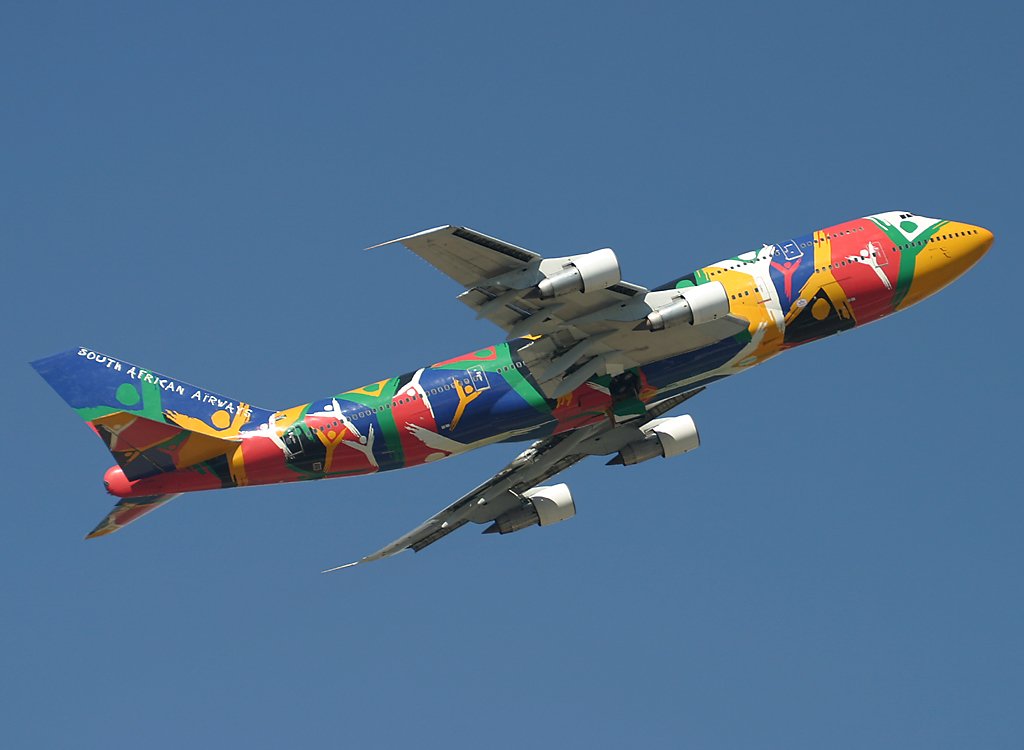
B747 SouthAfricanAirways
South African Airways

Africa’s cash-based economy has largely protected it from the financial meltdown. Trade is often based on face-to-face transactions and most conferences are government-sponsored, meaning travel budgets have remained intact.

Ethiopian Airlines chief executive Girma Wake says: “Africa is in a slightly better position than the rest and therefore the mood is not as bad among African carriers.” Nigerian transport minister Babatunde Omotoba agrees: “Africa remains an area of opportunity where we are still experiencing real growth.”

This year African carriers are expected to rack up $200 million in operating losses, swelling to $500 million at the net level, according to the latest IATA forecast. While this outlook seems bleak, both figures have in fact been narrowed by $100 million against earlier predictions. “The global recession has hit African economies but in most cases not as badly as elsewhere,” explains IATA chief economist Brian Pearce.

While the reduced loss outlook is undeniably positive, IATA is keen to play down the significance of the revised figure: “There was a small improvement which, when rounded, came out with the $100 million shift. It can be said that African travel markets are holding up marginally better than expected and when compared with the rest of the world, but the forecast does not signal that there has been any fundamental improvement in prospects for Africa’s airlines.”

Although traffic and yields have held up comparatively well, the local business environment is likely to remain tough -especially as fuel prices edge back up. “Another year of significant losses is expected in 2009,” warns Pearce. AFRAA president and LAM Mozambique Airlines chairman Jose Viegas agrees, noting that the world financial crisis will “most certainly hit African airlines during 2009″, causing record operating losses. He adds: “By and large airline profitability has been quite poor in the first quarter of 2009.” Viegas is expecting traffic volumes to pick up from the third quarter of 2009 as preventive measures begin to kick in.

Despite the downturn, some of the reion’s airlines are thriving. Ethiopian Airlines’ 2008-09 interim operating revenues shot up 54.8% to Birr6.7 billion ($600 million), yielding 9% net profit growth.

It even defied the gloomy freight market, more than doubling its interim cargo volumes. Ethiopian Airlines chief executive Girma Wake says: “For Ethiopian this is going to be a record year of profit.”

Tunisair is also reasonably upbeat. It posted record traffic and load factors in 2008 and Tunisair vice-president for commercial affairs Ali Miaoui says: “Despite the crisis, in 2009, we have decided to continue our expansion strategy.”

He expects traffic to increase 2-3% this year, with turnover remaining stable at around $850 million. But the signs of the downturn are still there. “I think we will probably break even [in 2009],” compared with a Dns32 million pre-tax and net profit in 2008.

Others have been struck by local challenges and are not faring so well. Sudan Airways general manager Al Obaid Fadl AlMoula says: “Sanctions have affected us harshly. We can’t operate far because we can’t get spare parts for our aircraft. It is affecting us financially and even in our relations with other airlines.”

Air Zimbabwe group chief executive Peter Chikumba says his carrier is in “intensive care”. He is aiming to narrow net losses from $49 million to under $10 million this year. “A good airline should be able to at least break even in Africa,” says the Air Zimbabwe chief.

Southern African airlines are facing “an unprecedented crisis”, says Viegas. “In the last 12 months alone, some have filed for bankruptcy. The lack of cash flow has hit the region’s so called ‘big brothers’ too.” Airlines Association of Southern Africa chief executive Chris Zweigenthal agrees his members were “certainly hit” by last year’s high fuel prices: “At the moment the carriers are all under huge financial strain, there is no question about it.” But he adds: “The fact that the airlines have weathered the storm until now probably means that they will continue to do so going forward. I think we are going to get through this crisis and I don’t think we will see significant failures in the sub-region.”

Zweigenthal is expecting the recovery to kick in towards the end of 2009, noting his members should get a boost from South Africa hosting the 2010 football World Cup. Tunisair’s Miaoui, however, believes the recovery will come slightly later, from mid-2010. “If it lasts more than two years, it will become ­difficult for everyone,” he cautions.

But the lucrative African market has not gone unnoticed. Wake says: “I think there is more focus on Africa now than ever before. Airlines would rather fly to Africa than park their aircraft. One attraction is yield, another is weak competition. Why use your aircraft on the Atlantic with strong competitors when you can move them to Africa?” Source: (Airline Business)

Posted in BusinessComments Off

Eritrea: 14-Year-Old Eritrean Boy Undergoes Operation in Germany

Eritrea: 14-Year-Old Eritrean Boy Undergoes Operation in Germany

Samuel, a 14 year old boy from Eritrea, lost one leg during a machine accident in September 2008. Humanitarian medical help group (Hammer Forum) for children in war zones brought Samuel to Germany for operations to his second leg.

Hence, German surgeons have been conducting a series of operations in order to save his second leg. After the operation, Samuel’s condition improved and he is now learning to walk with the help of crutches and a lower-limb prosthetic device for his lost leg.

These operations were necessary and effective because the boy lost part of the bone structure during the accident. Throughout the operations and medical treatment Samuel is living with a German foster family, which makes him feel home. When asked what he likes best about his new home, he said “Watching TV the whole day”.

Samuel is from a poor family background with his mother and his ten year old brother living in a small rural village in Eritrea. He reached 7th grade at school and speaks Tigrigna and Arabic.

His mother could not have afforded the expenses required for his treatment to help her son keep his second leg safe. It was only with the support of the medical help group that made this possible to happen.

Meanwhile, everyone takes care of the boy who has adapted very quickly to his new environment far from Eritrea. His foster family remarks, “We could not believe how quick he learned the German language”.

Samuel’s future plan is to go back to Eritrea once he finished his operations but intends to return for a visit to his friends and foster family and of course he will be watching TV all day long.

Posted in StoryComments Off

Eritrea: South Boulder Officially Granted Licence for Mining Project

South Boulder Mines

South Boulder Mines Ltd. (ASX: STB) announced today that it has been granted officially the Colluli Potash Project exploration licence by the Eritrean Ministry of Energy and Mines.

The Colluli Potash Mine is located in the Danakil Depression region of Eritrea approximately 200 km south east of the capital of Asmara and covers an area of 906 km2.

According to South Boulder the project is said to be located in an area, which used to be used by the former Ethiopian Potash Company (EPC) for diamond drilling in 1968.

“The Project consists of buried evaporite deposits in which two shallow potash bearing horizons were identified from historic diamond drilling conducted in 1968 by the former Ethiopian Potash Company (EPC). The first horizon intersected an average thickness of 1.7m sylvinite with average grades of 12.5% K2O at depths to the top of the horizon ranging from 23m – 180m. The second horizon intersected an average thickness of 17m carnallite with average grades of 50 - 70wt% *(~17% K2O) at depths to the top of the horizon at 390m.”

The Danakil Depression has ancient history of artisanal salt production with modern exploration and exploitation dating back to the early 1900’s. The most intensive period of exploration and trial underground mining occurred between 1958 – 1970 at the Musley and Crescent deposits, located approximately 15km south west of Colluli at Dallol. Since 1968 there has been no exploration at the Colluli Potash Project.

The project is located less than 100kms south of the shallow water port of Mersa Fatma and less than 200kms south east of the deep water port of Massawa.

South Boulder stated that the potential of using solar evaporation and solution mining techniques make the project in Eritrea very attractive. These factors coupled with the relatively shallow nature of the mineralisation could lead to relatively cheap capital and operating costs if a deposit is defined.

South Boulder intends to complete detailed data compilation and to undertake diamond drilling, to confirm the reported potash intercepts and to collect samples for preliminary metallurgical test work.

The drilling is planned to commence in the field season early October. South Boulder believes the project has the potential to host a world class potash deposit and is committed to assessing this potential. South Boulder is in the process of setting up a local branch office in Asmara including the recruitment of local administration and geological staff in order to support exploration.

Posted in InsightComments Off

Video: Eritrean President in Interview with Financial Times

President of Eritrea Isaias Afwerki gives interview to Financial Times.

Source: (EastAfro)

Posted in BusinessComments Off

Eritrea: Sanu Resources Ltd. Special Shareholders’ Meeting on Merger in August

Asmara Sunset

Asmara Sunset

Sanu Resources Ltd. is calling its Sharholders for a meeting on the planed merger with Canadian Gold Hunter Corp. The meeting, which will be held in Vancouver, British Columbia, on Monday, August 17, 2009, has two main purposes:

Firstly, to conduct a special resolution in the reduction of Sanu’s stated capital account by as much as CDN$18,000,000 that needs approval by the Sanu Shareholders of the Arrangement Resolution.

It is expected to close the arrangement on the 20th of August, 2009 provided that the required Sanu Shareholder as well as the Court and regulatory approvals and other terms and conditions are all received.

Secondly, it includes the authorization and approval of the proposed arrangement under which Canadian Gold Hunter Corp. (“CGH”) will acquire all of the issued and outstanding shares, options and warrants of Sanu. In a report, Sanu stated that through the proposed business combination with CGH, Sanu shareholders are expected to be well positioned.

The most advanced project is the Hambok deposit, massive sulphide copper/zinc exploration in Eritrea.

Hambok is a massive sulfide (VMS) deposit located at N15o25’07” / E37o24’31”, in Gash Barka District, west-central Eritrea.

In the latest Fact Sheet Sanu Resources provides five major points on Eritrea’s potential as a mining destination.

Perhaps one of the most important findings by Sanu is that the risk of doing business in Eritrea is over rated and therefore competition from other companies limited.

The facts are as follows:

Major emerging Volcanogenic Massive Sulphide (VMS) province: the Proterozoic Nubian-Arabian Shield on both sides of the Red Sea is emerging as one of the world’s most significant VMS provinces

High value gold-rich deposit commonly oxidized to >50 m; with significant oxide gold caps underlain by supergene enriched copper

Under-explored despite significant discoveries in the last ten years – Bisha, Eritrea, Ariab District, Sudan

Desert terrain, Simple to explore with low cost remote sensing and basic prospecting methods

Limited competition due to perceived over rated risk

Besides, Sanu operates in the carbonate-hosted heavy metal exploration in the Republic of Congo; as well as greenstone-hosted gold exploration in Burkina Faso. CGH is holding a large and diversified portfolio of exploration projects in Canada, Mexico, Argentina, Chile, Colombia and Peru. It is anticipated that combining the two companies will create one of the strongest exploration vehicles in the industry.

This is the second build up of mining companies planning to merge, which have projects in Eritrea. Sub-Sahara Resources and Chalice Gold Mines are on their way to merge mainly for financial reasons – Sub-Sahara has just under a million ounces of gold at Zara, but very little money for development, while Chalice has around A$10 million in the bank.

Posted in BusinessComments (1)

Eritrean-Qatari Relations Praised

Eritrean-Qatari Relations Praised

Doha, July 26 (QNA) - Eritrean Presidential Advisor Abdallah Jabir praised the “very distinct and growing” relations between Qatar and Eritrea, and noted the fraternal relations between H.H. the Emir of Qatar Sheikh Hamad bin Khalifa Al Thani and Eritrean President Isaias Afworki.

The Eritrean Presidential Advisor is currently visiting Doha to attend the Eritrean cultural festival, which was concluded in Doha yesterday.

In remarks to reporters, Jabir referred to the Qatari economic and tourist investments in Eritrea, hoping that bilateral relations would witness further development for the benefit of the Qatari and Eritrean people.

He added that there are Qatari-Eritrean common interests on the Horn of Africa, especially in what related to support peace and stability in the Sudan, Somalia, the Red Sea and Indian Ocean.

In the meantime, the Eritrean official praised the Qatari initiative aims to resolve Darfur crisis, saying that it is an “honest” and “internationally supported” initiative.

Posted in BusinessComments Off

Eritrea: Harvard Magazine Reports on Eritrean Girl’s Award

Yohanna Iyasu

Yohanna Iyasu

Eritrean-born Yohanna Iyasu’s parents moved their family to the United Kingdom from Holland when she was 11, hoping for a better education for their children.

Although she became fluent in English, her difficulties with the written language caused her to struggle with the Advanced Level exams required for admission to universities; her scores limited her chance of entering an architecture program.

Oni Hinton was already on the road to a career in architecture when she became seriously ill during her final years of high school. Her professional dream was put on hold when family troubles compounded the struggles caused by her illness. But this summer, both Iyasu and Hinton have had the chance to pursue their dreams of becoming architects.

Along with four other underprivileged British adults—Nick Ackers, Callum Gilbert, Luke Henry-Powell, and Paula McDonald—they are attending the Career Discovery Program, an eight-week introductory course at the Harvard Graduate School of Design (GSD). Their sponsors are the Stephen Lawrence Charitable Trust and the U.K.-based architecture firm RMJM, through the Architecture for Everyone program the two organizations created: a three-year campaign that seeks to increase diversity within the profession.

The chance the six British students have been given is rare in the field of architecture. According to a research study conducted in 2004 by the Royal Institute of British Architects, only 2 percent of practicing architects in Britain are ethnic minorities.

Peter Morrison, CEO of RMJM, publicly warned the architecture community last year that if diversity in their field did not increase, the creativity level would stagnate. “We need to reach out today to kids from all backgrounds interested in becoming architects,” he said. “We need new faces, new ideas, and new ways of looking at the world. The same old, same old is boring and come 2030, if not already, boring design will not close the deals on big projects.”

Morrison was in touch with Doreen Lawrence, who had created the Stephen Lawrence Charitable Trust in honor of her son, an aspiring architect, who was a victim of racially motivated murder. Their conversation about how to open up opportunities in the field led to Architecture for Everyone.

That campaign held workshops in inner cities across the U.K. earlier this year, seeking to attract a diverse and talented group of potential young architects.

Attendees learned about the industry from senior architects and presented their own designs. Twelve of the most talented participants at the workshops were invited to a competitive interview, after which the six winners were chosen.

The Architecture for Everyone program also reaches out to high-school students. On a trip to London to participate in a panel discussion connected with the annual Stephen Lawrence Memorial Lecture, D.K. Osseo-Asare’02, M.Arch ’09, an instructor in the Career Discovery Program, was encouraged by the tutorials being offered and the work produced by the students at the Stephen Lawrence Centre. “To have seen the students there and now to see the six students here, I find it inspiring. It makes me feel hopeful,” says Osseo-Asare. “You have to start somewhere, and you have to start with the best.”

He champions RMJM’s commitment to increasing diversity in the profession, despite the recession, and is pleased that their efforts have garnered attention globally, noting that “What RMJM is doing is relatively novel. Some large firms sponsor similar initiatives on a case-by-case basis,” but these smaller-scale efforts “are mainly off the radar.”

Yohanna Iyasu is glad to be able to put Harvard on her résumé because she knows it will make her a stronger candidate in applying for architecture programs. Oni Hinton, who was working as a sales assistant at a jewelry shop, cherishes the opportunity to have her professional passion become a tangible option once more. “If I hadn’t gotten ill I would be in my third year,” she says. “But now I’m here getting the opportunity to do everything I would have done.” (Harvard Magazine)

Posted in BusinessComments Off

Saudi Man Arrested After Talking Sex on TV

LBC Show Red Line

A Saudi Arabian man was arrested after bragging about his sex life on television, local media reported.

Mazen Abdul Jawad appeared last week on a show on Lebanese channel LBC, where he went into “graphic details about his sexual conquests,” according to Arab News, an English daily.

A segment of the show “Red Line” posted on YouTube shows the 32-year-old talking about sex and foreplay.

He also discusses losing his virginity to a neighbor while he was 14. In deeply conservative Saudi Arabia, pre-marital sex is illegal and unrelated men and women are not allowed to mingle.

A government official told the newspaper that discussing sex in public is a punishable offense that may affect anyone involved in the broadcast.

“It is wrong to host people on television to speak publicly about vice and issues against our religion,” said Ahmad Qasim Al-Ghamdi, director of Mecca’s branch of the Commission for the Promotion of Virtue and Prevention of Vice, also known as the religious police.

“The program presents anomalies and deviancy in society that are unacceptable and immoral, and should be punished according to Shariah.”

About 100 people have filed a complaint against Abdul Jawad, alleging among other things, that he violated a principle of Shariah law by “publicizing his sinful behavior,” the daily said. It’s unclear what punishment, if any, Abdul Jawad faces. (CNN).

Posted in StoryComments Off

Eritrea Receives $1.5 Million from UN Emergency Response Fund

Eritrea Receives $1.5 Million from UN Emergency Response Fund

Africa

Africa

United Nations Central Emergency Response Fund (CERF) has announced it has allocated emergency fund worth $ 55million for people most affected by hunger mainly in the African continent.

Eastern Africa nations of Eritrea, Ethiopia, Djibouti, Somalia and Kenya are also on the list. An estimated 13 million people are facing hunger due to drought-related reasons and requires an emergency food aid.

John Holmes, United Nations emergency relief coordinator from New York is reported to have expressed appreciation to countries who contributed to this funding.

Rich nations and private companies are reported to have donated to UN emergency pool. Kenya will share $8 million (7%) from the global allocation.

The aid allocation breakdown is DRC Congo ($10 million), Zimbabwe ($9 million) ,Chad ($6 million), Ethiopia($6 million),Central Africa Republic($2.8 million).Algeria will get $1.5 million, Eritrea ($1.5 million), Guinea ($1.2 million) and Djibouti ($1 million).

North Korea,the only Asian country will receive $9 million. At the beginning of 2009 UN emergency relief office was allocated $75 million to tackle world humanitarian crises. (NGO News

Posted in RegionComments Off

Eritrea: Volcanic Eruption on the Eritrean-Ethiopian Border

Volcano in Danakil

Geologists in the region report that a huge amount of lava has spewed in the remote volcanic complex in Ethiopia’s Danakil Depression bordering Eritrea.

According to the report, the eruptive activity has started since late June and the heat from the spewing lava was first detected by space-based thermal sensors.

The area is believed to be home to mainly nomadic herders. So far there have been three other eruptions of the Manda Hararo volcanic field since the first volcanic activities in modern times began there in August 2007.

However, the Ethiopian News Service announced that the current eruption is being accompanied by dense plumes of sulphur dioxide gas.

According to the news, the eruption killed five people and hundreds of livestock and forced 50,000 nomads to flee, although there is no detail if the eruption has struck any of the nomadic herders in the area.

This active volcanic area is an extension of the East African Rift Valley, the oldest and best defined rift in the Afar region on the Eritrean-Ethiopian border.

The exact mechanism of the rift formation is still under debate among scientists.

Evidences suggest that the East African Rift System (EARS) assumes elevated heat flow from the asthenosphere (the liquid layer of mantle), which is causing a pair of thermal “bulges” in central Kenya and the Afar region on the Eritrean-Ethiopian border.

It is believed that the EARS is one of the geologic wonders of the world, a place where the present tectonic forces could possibly create new plates by splitting apart old ones.

Posted in InsightComments Off

  • Latest
  • Popular
  • Comments
  • Tags
  • Subscribe
Follow capitaleritrea on Twitter

Stock Quotes

CHN.AX0.265  chart -7.02%
NSU.TO5.52  chart -5.64%
SGC.V0.39  chart -2.50%
STB.AX1.560  chart -5.17%
NGQ.TO2.69  chart +0.00%
ANTO.L1098.00  chart -0.45%
DRA.AX1.400  chart -0.36%
GIP.AX0.020  chart -9.09%
GLD167.62  chart +0.31%
CAT93.93  chart +0.13%
TM63.56  chart -1.20%

Fog Asmara 13°
Fog Keren 13°
Fair Port Sudan 24°
Fair Cairo 16°

Gallery

streets-of-asmara mouthart3 tadese-video african-internet-growth.jpg 4 asmara-tea 1 coptic church eritrea