
work2
Having worked in East Europe for several years and as an Eritrean, I came across a quite unique and somehow familiar experience of life. It reminded me of my childhood in the early 80s, when my parents migrated to Germany during the liberation struggle in Eritrea.
Eritrean families used to be rather huge in size at that time. The German authorities settled us far out from every civilisation in a small village near the boarder to France. Hence, the villagers were quiet curios’ and astonished about the newcomers, which I did not understand at that time.
We were the only black family within a radius of 31 miles from the place we were living. No wonder that we were an attraction in many ways for the local people.
Some of the locals felt sorry, and tried to make life easier for us by inviting us to their home or helping us with formalities. I just remember one funny occasion, when our whole family was invited to a nights out at our neighbours place. When we arrived at the place there were many friends and relatives of our neighbours.
To my surprise they had placed three or four African drums at the middle of the living room and expected us to play them. In astonishment we looked at each other not knowing how to avoid disappointing our neighbours. So we started drumming the typical Eritrean “gualia” rhythm, which is no major science to do.
Honestly, no one of us new how to get African vibes and beats out of these drums. To our relieve people got bored quiet soon and the hosts changed the venue to the hobby room in order to show dia slights of their last holiday.
Read the full story
Two Women from South Africa are being tested on possible infections with the swine flu virus. The results could take some time as the samples have to be sent overseas for analysis. According to the AU health inspections have been set up at East African ports in order to prevent the virus to enter Africa. Read more The BBC.
African countries Burundi, Kenya, Ethiopia, Rwanda, Sudan, Uganda and Tanzania discuss how to respond to the current swine flu outbreak in Addis Ababa. Reasd more: Reuters News Agency.
Eritrean Airlines Region
The recession and the economical slowdown is hurting the African aviation sector at the most inconvenient time.
Just when it seemed that the sector was experiencing tremendous growth rates due to increased economical activity with the outside world, the recession made an abrupt end to it.
The growth motivated African avitaion to improve the quality, safety and service to provide the same standard as western carriers, due to increasing partnership with other non-African airline as well as the growing number of freight and passengers volumes. In early April European and African representatives have met to discuss the establishment of a common strategic framework for air transport safety (European Commission).
Early during the year in January African aviation traffic dropped by 2.6% according to the International Airline Transport Association (IATA).
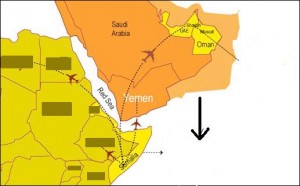
Many African airlines are reducing capacity by cutting on routes from this year. Eritrean Airlines stopped flying from Asmara to Frankfurt (capitaleritrea), Air Namibia suspended flying to London, Air Senegal stopped operating at all and many other carriers took similar actions.
The near future does not look promising as demand for travel and freight is continuing to drop.
In addition IATA expressed concerns that the Swine Flu outbreak will further reduce demand when the timing could not be worse. The latest IATA statistics show that airline revenues declined by up to 20% for the month of March.
alwaleed_bin_talal
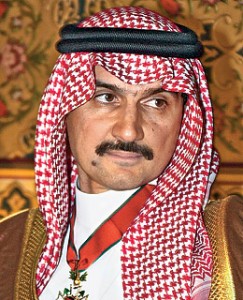
In March 2008, Forbes Magazine published the worlds richest billionaires. Ranking number 19 was Prinz Al Waleed bin Talal, a Saudi business man who supposed to be the promoter of trade between the Middle East and the West.
a380
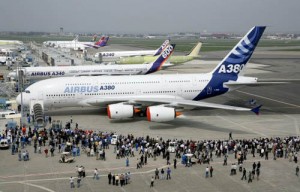
The Prinz had a extravagant lifestyle and was the first private person to order a custom made Airbus 380 for his personal use. His risky financial investments during the stock market boom come now to hunt him due to speculative losses when the financial downturn started. The Prinz tries now to shift from business man to politician, in order not to loose everything of his fortune.
Read more:
According to the WHO the swine flu epidemic has so far not broken out in Africa. There are no known cases of infected people on the continent. Given the poor medical infrastructure and a lacking response network on the continent, an outbreak in Africa could have devastating impact on the death toll and rate of infections linked to swine flu.

massawa-sunglasses
Luca’s grandfather was an Italian living for a while in Eritrea. When Luca was looking through the old belongings of his grandfather, he discovered a model of sunglasses from old times, which fascinated him. He had the idea to bring the elegance of Africa paired with the design of Italy into a newly merged model of sunglasses. He went back to the original manufacturers to reproduce them and named some designs after places in Eritrea, such as Asmara, Massawa and Keren. The collection of sunglasses and old pictures of his grandfather in Eritrea can be viewed on the brand’s homepage. The sunglasses are manufactured in Italy.

Tadesse Abraham
Abraham Tadesse the new comer from Eritrea made his first Marathon and finished the first place at the Zurich competition. The 27 year old Eritrean runs for the team LC Ulster. The second place went to Oleg Kulkow from Russia and Tesfaye Eticha from Ethiopia achieved the third rank. Read more:
World Bank head Robert Zoellick warns of a “human catastrophe” unless more is done to tackle the global economic crisis.

eritrea-malaria
In a recent Wall Street Journal report, Mr. Chernin (Board of Directors Fight against Aids, Malaria and Tuberculosis) is explaining that the fight against Malaria has been a success story in countries such as Eritrea and other Horn of Africa nations. As Malaria is said to cost 1.3% of the GDP to those countries who do not progress in the fight against the disease, it shows that it can pay out for a nation to invest in getting Malaria under control. The Wall Street Journal report highlights that it would be possible to eliminate Malaria completely from the earth, if governments and nations act swiftly. Read more from the Wall Street Journal Report. In another news cast by
Reuters the Lutheran World Federation claims that Malaria was a major problem for Eritrea during the 90s causing most deaths for adults and children above the age of five. Techniques introduced by the authorities in Eritrea such as:
- Sufficient Health care for Patients
- Introduction of insecticide treated nets in Eritrean rural areas such as villages
- Intensive participation of the community in draining Mosquito breading sites
- Public relation and mass media to create awareness
have helped Eritrea to nearly eradicate the disease.

mining-eritrea
For the past few years African countries exporting mining products were in a good bargaining position, due to a strong world demand and high prices. This has recently changed due to the world recession and declining commodity prices. The shift places big western companies in a better bargaining position, which is in general terms nothing to worry about, as it reflects the rule of a free market economy.
However, those big players tend to overstep the mark if the African continent becomes desperate for income in times of world crisis. Many countries want to cash-in quickly on deals, they tend to undersell their treasures to the western companies contracting them for many years.
As a new entrant to the mining industry Eritrea should act wisely and assure that it gets a fair deal with the western companies (capitaleritrea article). Many African countries have been exploited in the history and the wealth has hardly benefited the origin of the natural resources, speaking of the country and the people. There are many examples, such as Nigeria, Kongo and many more who can serve as proof that foreign companies are only aiming for profit maximisation, but hardly for sustainable trade with the host country. This is exactly what African countries try to avoid by consolidating their efforts to put pressure on multinational companies and investors. Read more from the Business Daily.
Posted on 24 April 2009
Tags: Africa
The African National Congress is heading for a decisive victory in South Africa’s poll, taking over two-thirds of the vote so far.



 -7.02%
 -5.64%
 -2.50%
 -5.17%
 +0.00%
 -0.45%
 -0.36%
 -9.09%
 +0.33%
 +0.13%
 -1.20%
 Asmara
13°
Asmara
13°
 Port Sudan
24°
Port Sudan
24°


