Tag Archive | "Integration"

Eritrean Gets over 9 Million Hits on YouTube

Tags: , , ,

Eritrean Gets over 9 Million Hits on YouTube


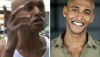
Tedros Teclebrhan

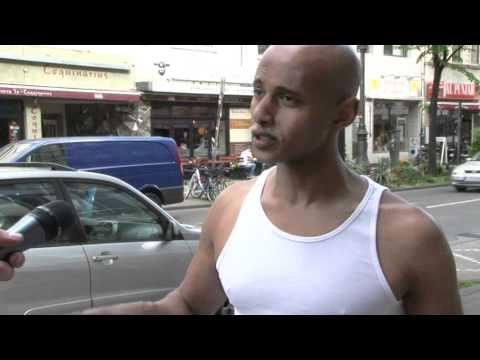
Eritrean Comedian Tedros Teclebrhan posted a video on youtube reaching to date over 9 Million hits. Meanwhile the media has caught up to his youtube success story. The German Spiegel has covered his story with a short video but the most revealing story about his popularity was written by Michael Dimitrov from cafebabel.com back in June.

“Street integration test: German Youtube hit Tedros Teclebrhan”

He hasn’t hit his wife for more than two months now, has never heard of the fall of a certain wall and thinks the chancellor before ‘Angelo Merte’ was Hitler… Within two weeks, the video of the man with the blond mustache became a German web hit. Over 5.5 million people have already clicked on it the promotional video, thinking the actor was a real migrant and thus not noticing the mirror being held up to German integration policy

28-year-old Tedros Teclebrhan came to Germany with his mother and two older brothers when he was just seven months old. The family fled from the civil war in the state of Eritrea, North Africa, to their new home in Baden-Wuerttemberg. All were given asylum and thus the chance to start a new life in Germany. ‘I love Germany; my family and friends are here. I have a German passport,’ says Tedros in perfect German in an interview with ihned.cz, the online edition of the Czech daily newspaper Hospodarske Noviny.

‘But I do not feel like a German citizen here because the first thing many people see is not a German man, but a suspicious man with dark skin.’ That is exactly what happened to Tedros in early May. He was seemingly stopped by a television crew on the street led by reporter Adrian Draschoff before willingly answering questions for a survey that was being asked of all new immigrants from non-EU countries, as well as foreign nationals who want to become naturalised. This so-called integration test can allegedly verify whether a person is integrated well enough

Citizenship? Then I won’t pass that test!

Immediately after the first question, it was obvious that the dark-skinned Tarzan, who was wearing a white vest and talking on his smart phone, did not have the faintest idea about the realities of his country. The survey for the integration test (‘Umfrage zum Integrationstest’) video, subtitled outtakes (‘was nicht gesendet wurde’), became an immediate hit on Youtube. After five days it had exceeded the one million mark; after two weeks, the number of viewers had risen to three and a half million.

For some, the survey is just another sad testament to the failed integration of immigrants in Germany. For others it is a satirical critique, holding a mirror to a xenophobic German society. Commentors have questioned if the video is actually authentic, or whether migrants to Germany really know so little about their new home. So what’s the truth?

You can also read ‘Citizenship exams: spotlight western Europe’ on cafebabel.com

Tedros Teclebrhan, now without his trademark blond mustache, smiles shyly. He had not expected his sketch to be such a great success. The young actor, who speaks fluent Swabian and ‘Turkish-German’, just wanted to have some fun with the video. ‘I was once in a similar situation myself,’ he adds. ‘I wanted to impress others but it went wrong. Straight after I thought it would have been better if I had stayed quiet. But in retrospect, we laugh about it. I come from a culture where you laugh a lot, it’s like therapy.’
YouTube Preview Image

Actor, not politican

Tedros can hardly believe the fact that many people have taken his video deadly seriously and discussed it so passionately. ‘I have quite deliberately demonstrated the absurdity of the answers to the questions. It is completely OTT. Everyone knows that Germany has a female chancellor. No-one would ever say that he beats his wife at home in public.’ Having said that, Teclebrhan does think there are many badly-educated people in Germany who have major problems with similar questions, including migrants as well as Germans, he points out.

Tedros himself was not that far from becoming the classic example of failed integration. ‘School was quite a turbulent time. I changed schools often. But eventually I came to, got my secondary school education and completed my training in Stuttgart.’ Tedros has already starred in several television films. His greatest achievements includes a starring role in the world-famous musical Hairspray between 2009 and 2010, which was adapted from Broadway and became a blockbuster in Cologne. So how would Tedros criticise the passionate debate among high-level politicians who argue about how many immigrants there are in Germany who ‘refuse to integrate’? Or whether multiculturalism has actually failed, as the chancellor herself stated in October 2010? Or whether or not islam is now part of Germany? ‘I’m an actor, not a politician,’ states Tedros. In any case, there is a message for everyone in his sketch. ‘I do think that a big problem in this society is the lack of tolerance — on both sides,’ he emphasises.

Source: cafebabel.com
Posted in StoryComments (4)

Hanover City Council Names Eritrean Social Democrat Biniam Kiflai Citizens’ Representatives

Tags: , ,

Hanover City Council Names Eritrean Social Democrat Biniam Kiflai Citizens’ Representatives


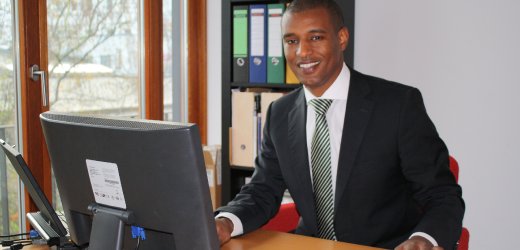
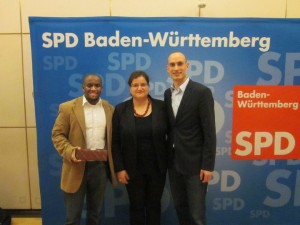
Among others, integration and migration have been and still are topics that Biniam Kiflai has stood up for since many years. The Eritrean is engaged in the migration committee and stands up for the interests of migrants in particular.

For him, it is important to emphasize empathy and mutual respect, which both are necessary for a successful integration.

The migration committee of the Hanover city council deals with all topics related to integration and immigration. The expert committee was founded by the council in 2002 and succeeded the former foreigner’s council. The committee consist of 11 regular council members, proportional to the current distribution of seats, and 11 consultants with migration backgrounds, who are named by the fractions in accordance with the distribution of seats as well. At the city hall, the representatives were welcomed at the SPD caucus on 29 March 2011 at 6 p.m. After the ceremony there was plenty of time to get to know each other and discuss.

More information

Biniam.1@hotmail.com

Posted in LivingComments (0)

Biniam Kiflai: “Strengh of the German-Eritrean friendship”.

Tags: , , , , ,

Biniam Kiflai: “Strengh of the German-Eritrean friendship”.


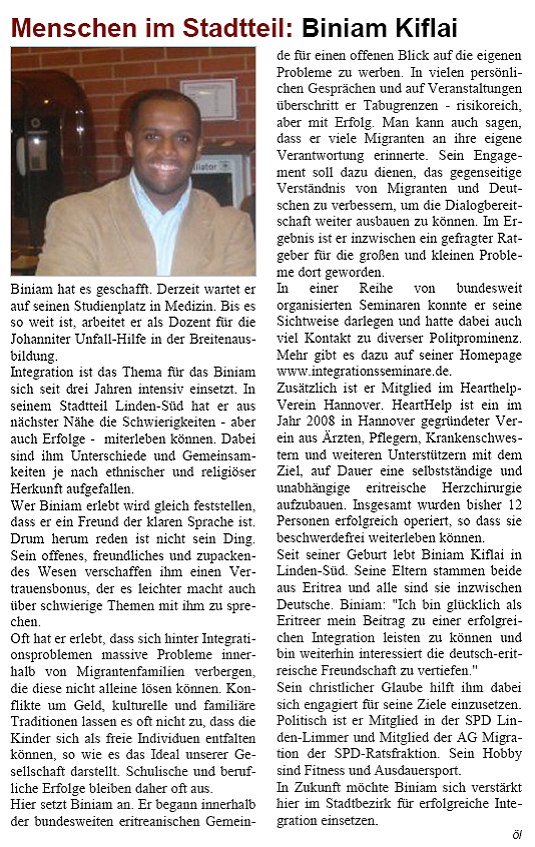
Biniam has made it. Currently he is waiting to start studying medicine. Until he starts, Biniam works as a first aid lecturer for the Johanniter Unfall-Hilfe.

Integration is an issue that Biniam has been intensively pushing since three years now. In his neighborhood Linden-Süd you could experience firsthand both the difficulties and success. He noticed the differences and similarities regarding one’s ethnic and religious background. For those who know him and have seen him will notice that he is a man of plain and direct words. Beating around the bush is not his style. His open-minded, friendly and supportive nature helps building a comfortable and trustworthy environment, which makes it easier to talk to him even about difficult topics.

He has often witnessed that integration problems are based on massive problems within migrant families, which they cannot resolve on their own. Issues about money, cultural and family traditions often do not enable children to develop freely as it is desired in our society’s ideals. Success in school and at work is missing. This is Biniam’s starting point. Within the Eritrean community in Germany he made people aware of these problems. In numerous personal discussions and on events he crossed taboos – risky, but successful. One could say he has reminded many migrants of their responsibility. His commitment aims to improve the mutual understanding of Germans and migrants as well as strengthening the willingness to engage in a dialogue. As a result, Biniam functions as counselor and adviser for both big and small problems.

In a series of organized seminars across Germany you could present his view and could establish contacts to representatives of political parties. You can find more about it on his homepage www.integrationsseminare.de

Furthermore, he is an active member of HeartHelp Hannover. HeartHelp was founded in 2008 in Hannover. The association consists of doctors, nurses and supporters who all pursue the goal to establish an independent heart surgery in Eritrea. By today a total of 12 patients underwent a cardiac surgery. Thanks to this programme, they can continue to live a life without pain or constraints.

Biniam has lived all his life in Linden-Süd, since the day he was born. Both his parents came from Eritrea. All family members are German citizens by now. Biniam explains: “I am happy to successfully contribute to integration as an Eritrean, and I am interested to strengthen the German-Eritrean friendship”.

His Christian belief supports him to pursue his goals fully committed. Biniam is politically active as well. He is member of the social democratic party SPD in Linden-Limmer and member of the SPD council group’s working group “Migration”. His hobbies are fitness and endurance sports. In future, Biniam wants to promote a successful integration even more in his urban district.

More Info:

Biniam1@web.de

Posted in LivingComments (0)

The Spiegel Magazine: An Eritrean in Frankfurt

Tags: , , , ,

The Spiegel Magazine: An Eritrean in Frankfurt


Google translated version from The Spiegel article “I belong to the Underdogs, not to the Germans” by Simone Utler.

Simon Woldeab was five years old when he fled with his family by civil war-ravaged Eritrea. In Germany, the 36-year-old has found a new home. However, he does not feel really as a German.

Frankfurt am Main - About the issue of integration Woldeab Simon has stopped thinking long time ago. Until once, when the native of Eritreans was waiting with his wife in a fashion store in front of a dressing room, an elderly woman pushed past her husband to them and said loudly: “You do have nothing to do anyway and get the money thrown after you.” Woldeab abruptly turned in the cabin and said, “Then we take a dressing room together.” The couple moved away full of anger.

Woldeab, 36, who lives in Germany since the age of five, went to school and studied Industrial engineering. He has worked for ten years as a management consultant and a doctoral thesis on product differentiation in the energy sector. Although he had been in the circles of the consultant the only Africans, but: “I have no problems because of my race and my heritage, ” Woldeab says, smiling. Especially in this industry include travel in particular. Such encounters as the front of the dressing room are extremely rare.

But since late summer, since the theses Thilo Sarrazin, Simon Woldeab think more often about how he feels at home in Germany. Is it integrated? As before, he answered that question with a nod. “I feel well rooted, have German and Eritrean friends want to spend my life here and not to emigrate if I have enough money.”

No, in subways or on the street he would not be harassed or stared, did not have the feeling of being unwanted. “But perhaps this is also to the fact that I’m staying mostly in Berlin, Hamburg and Frankfurt.”

More than 300 kilometers on foot

When he came to Germany Woldeab did not even have a birth certificate. In 1979, the then five-year-old fled with his mother, his older brother and other relatives and friends before the civil war in Eritrea. For several weeks they marched, mostly at night because daytime military aircraft were on the road. More than 300 kilometers they put back in the capital Asmara through mountainous country, the low level and in the Sudan. Saudi Arabia, they came to Germany, where they had friends and their problems as political refugees were granted asylum.

Woldeab remembers his first day in Germany, it was very cold, despite the blankets that they had got on the plane. He remembers the first few weeks, as he admired by other guys in the Frankfurt train station, the escalators up and down and drove the model railroad. “For us children it was like an adventure. “

While the majority of Eritreans remained in Frankfurt, the Woldeab were housed in northern Germany, two months Puttgarden, two months Neustadt, then Kiel. “Back then it was difficult, but in retrospect I would call it lucky that we had no community - so we had to learn German.” In Frankfurt there are very many compatriots who have not made their way - perhaps because the integration conditions were suboptimal due to the number of Eritreans living there.

“Language is the key. This will open many doors, ” says Woldeab in flawless German. Even if someone prune after the first glance - “as soon as I spoke the first set, I would be perceived very differently “. German is his native language and he uses it skillfully, sometimes charming, sometimes ironic, always eloquently. Tigrinya, the language of his ancestors is, it is not quite as easy on the lips. He uses it with his parents and the community, even with his children so they grow up bilingual.

“Negative, negative, negro”

The family had then been well received. Perhaps it helped that Eritreans do have a dark skin but European facial features bear, perhaps the fact that many of them Christians, and names like Simon, David, Alexander and Moses, or that Eritreans are very ambitious, in general, asks is Woldeab.

At school he was mostly fine for me. Except once, in the ninth or tenth grade in physics class when the teacher about positive and negative electrical charges said. As a classmate had called the whole hour, “Negative, negative, negro. ” After the hour it had been beaten in the schoolyard, says Woldeab and grins: “But that can not be taken seriously.” Just as the scene when he traveled with his Abi-class England, and asked one of the classmates at passport control at the airport: “Man, where did you get that her German passport”

Since 1990, Woldeab German citizenship - but not really feel as a German, “I am not Eritrean, I live in two cultures. ” He loves to celebrate the joy of the Africans, their generosity and flexibility. He also had many points in African loose and relaxed. “But when it comes to the profession, I am very efficient and targeted.” The desire of the Germans to do everything and control structure is sometimes too strong.

But then he comes to problems with the integration to speak, for which he blames not the people in this country, but the politics of the eighties. “The door was never opened properly under the Kohl government gave it to German and foreign -. and I was very clear to foreigners, the underdogs, just not to the Germans.”

“Integration is give and take”

If they would in the youth not included by the system, then later get the feeling no more. “It’s not really but still wounds, but maybe something like scars.” Meanwhile in Germany was much improved, says Woldeab. And it sounds almost envious, or at least wistful when he spoke of his two cousins, 15 and 18 years old, says. “They grew up in a time walking around the young people of all nationalities for the soccer World Cup in Germany jersey and feel rather than German.”

“Integration is give and take.” foreigners learn the language, organize themselves here, and understand the laws in the German mentality. The Germans and the state would have the newcomers but also shows clearly that they are welcome. “You need to provide a positive feedback, showing that foreigners are an asset, because they bring different ways of thinking and ways of life and a certain potential that can be accessed for the benefit of all.”

Woldeab will play its part. During his studies he became involved in an Eritrean youth group and tried to teach boys and girls to do first, what’s coming, and then to drink tea - not vice versa as usual in Africa. Later, he organized events for young people with immigrant backgrounds and told of his own career, to make it clear: “. There are hurdles, but that may take you”

In the current debate provides an opportunity Woldeab. “Perhaps the Germans are now taking true that we are a multicultural society.”There have already been a break. “Figuratively speaking, we pulled the Germans and foreigners, even from two apartments into a WG. Now just have to accept another roommate or two and abide by the rules. “

Posted in LivingComments (0)

Successful Migrants in German Society

Tags: , , , ,

Successful Migrants in German Society


Berlin Major Wowereit

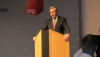
On 27 November 2010 the integration conference of the German Social Democratic Party (SPD), entitled “Arrived to normality. Successful migrants in German society“, took place in Mannheim.

Being an immigration society is a daily routine in Germany. Integration is lived million times. And it is far more advanced than the public debate about it. Therefore, we are laying the focus on opportunities, success and perspectives of integration. Our aim is to make migrants participate on all levels in society – economically, culturally and politically.

These topics were discussed by the Vice Chairman of the SPD, Berlin’s Mayor Klaus Wowereit, SPD’s top candidate and state chair of Baden-Wuerttemberg, Nils Schmid and Mannheim’s Mayor Peter Kurz. The event is part of the programme “Future workshop: a fair Germany”, in which the SPD specifically and directly discusses urgent social questions with interested people and parties. The results of the integration conference are documented and influence further discussion and decision processes in the integration politics of the SPD.

Biniam Kiflai: “Native-language classes support integration and shaping of identity”

Since several years guest speaker Biniam Kiflai, whose family comes from Eritrea, has been successfully involved in integration issues. He leads the discussion for a legitimate claim on native-language classes. Kiflai is a member of the Workgroup Migration of the SPD Council Group Hannover.

Speaker Biniam Kiflai (SPD Hannover) pleads to expand native-language class programmes. According to Kiflai, for children it is both an advantage for integration and finding one’s identity. Scientific studies conducted by UNESCO, show that children who first learned their native (family) language, obviously better master the country’s official language.

Furthermore, the language skills play predominant role in developing one’s own personality. Many children of migrants show a lack of bilingual language deficits, which makes shaping an identity very difficult.

Out of this, it is necessary to support children at an early stage. This can be done by improving the pre-school and school education support in which the families have to be included as well. Multilingualism will contribute to society’s and children’s enrichment.

More Infos:

Biniam1@web.de

Posted in InsightComments (0)


  • Latest
  • Popular
  • Comments
  • Tags
  • Subscribe
Follow capitaleritrea on Twitter

Stock Quotes

CHN.AX0.285  chart +0.00%
NSU.TO5.70  chart -1.89%
SGC.V0.40  chart +0.00%
STB.AX1.645  chart +0.00%
NGQ.TO2.76  chart -5.80%
ANTO.L1103.00  chart -6.05%
DRA.AX1.405  chart +0.00%
GIP.AX0.022  chart +0.00%
GLD167.00  chart -2.63%
CAT93.37  chart -2.49%
TM64.10  chart +0.88%

Partly Cloudy Asmara 14°
Partly Cloudy Keren 14°
Fair Port Sudan 26°
Partly Cloudy Cairo 19°

Gallery

Dahlak-house.jpg Fishing                              asmara dream f Old-Garage.jpg Eritrean Flag.jpg Swimming.jpg mouthart1 Coffee Asmara.jpg