
In a recently published study the IMF has revealed that Low Income Countries (LICs) in Africa would be heavily exposed to the recession. In particular, countries depending strongly on commodity exports such as oil, metals will face steep drop of their international currency reserves. In other words, decreasing prices of commodities, will lead to a decline of incoming hard currency in exporting African countries.
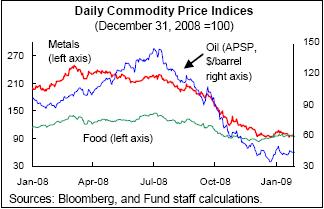
In general it is said that global activities are slowing down.
· OPEC oil prices low, due to decreasing trade.
· Metal and mining prices slowing down due to fewer construction investment.
· Lower prices of energy, will mean lower food prices.
· Above points will in general slow down Inflation.
How about countries such as Eritrea? These countries have been less exposed to globalisation due to limited cross border linkage in the banking system and the smaller trade capability due to a non mature export infrastructure. This should not imply that these countries are better off, it just draws upon the idea that the average Eritrean just might not feel worse then he as felt before the recession. On the other hand people in Europe or exporting African countries, such as Nigeria, Libya, and Egypt might feel a stronger change in their standard of living, when comparing today with the time before the recession.
Although, Eritrea could benefit from decreasing world food and oil prices and from being less exposed to the globalization of financial markets as well as not being a major exporter of goods and services, the recession will not pass by Eritrea unrecognised. The IMF is categorizing the impact of the recession on Eritrea as medium (Medium Vulnerability)
No related posts.


 +0.00%
 +0.00%
 +0.00%
 +8.36%
 +0.00%
 +2.96%
 +0.61%
 +0.00%
 +0.00%
 +0.00%
 +0.00%
 Asmara
21°
Asmara
21°
 Port Sudan
27°
Port Sudan
27°